Air Freight vs Sea Freight: Choosing the Optimal Mode for High-Value Commercial Cargo
Strategic decision matrix for supply chain executives. Evaluate chargeable weight calculations, carbon footprints, urgent delivery requirements, and total cost of ownership across air vs ocean corridors.
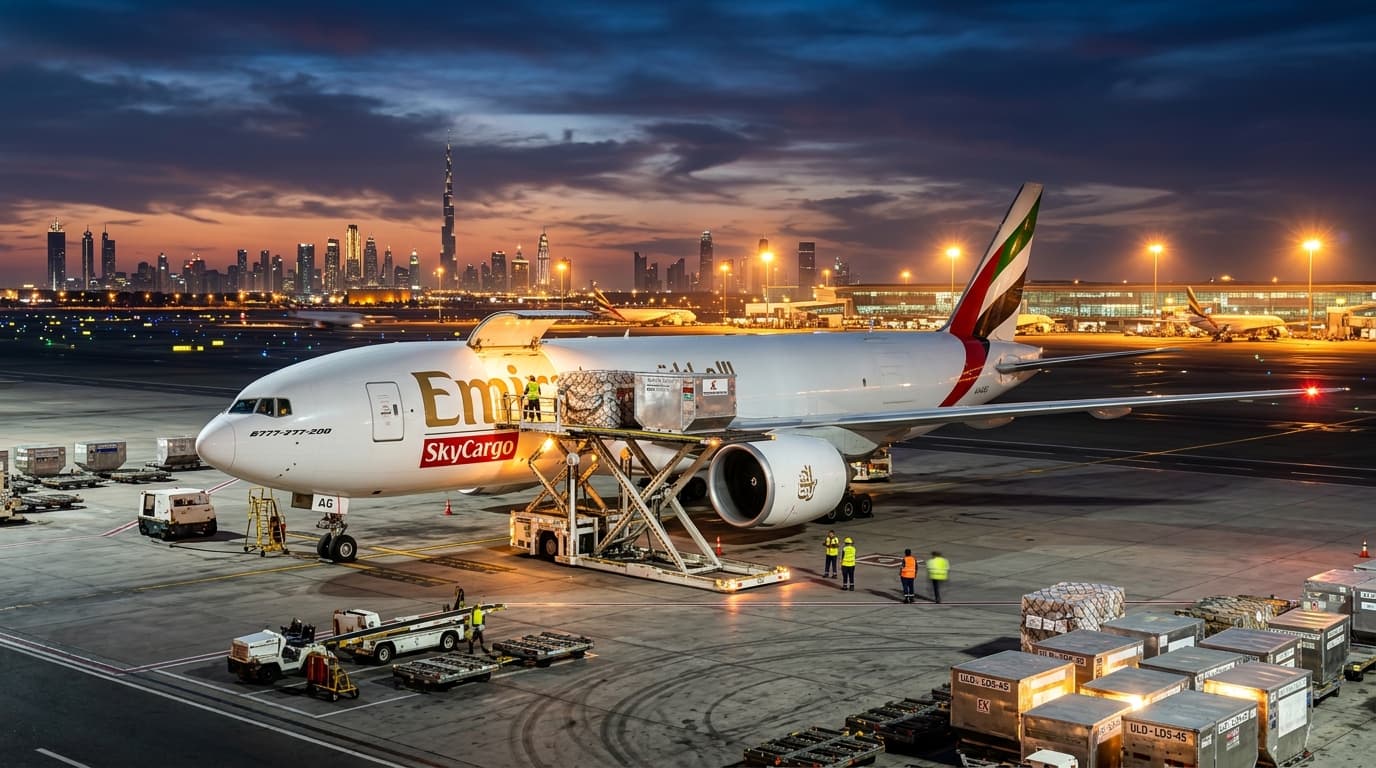
1. Strategic Modal Selection for Enterprise Supply Chains
Balancing speed, cost, and cash flow velocity requires supply chain managers to strategically evaluate whether consignments belong in the air or at sea. Dubai International Airport (DXB) and Jebel Ali Port (JAFZA) provide the world's premier multi-modal air-sea bridge.
2. Chargeable Weight Calculation: Air vs Ocean
Understanding carrier billing formulas prevents unexpected surcharges:
- Air Cargo Volumetric Ratio: 1 CBM = 167 kg (Formula: Length × Width × Height in cm / 6,000). Airlines bill whichever is higher between actual gross weight and volumetric weight.
- Ocean LCL Weight/Measurement (W/M): 1 CBM = 1,000 kg (1 metric ton). Ocean carriers bill on whichever figure produces greater revenue.
3. Sea-Air Hybrid Solutions: The Best of Both Worlds
For consignments where pure air freight is cost-prohibitive but pure ocean freight is too slow, Triport Logistics offers specialized Sea-Air multimodal routing via Dubai. Goods sail from Far East ports to Jebel Ali, clear customs under bonded transit, and are transferred to DXB within 8 hours for onward commercial flights to Europe, Africa, or the Americas. This cuts ocean transit time in half at approximately 40% the cost of direct air cargo.
Get a Customized Shipping Quote
Speak directly with our commercial freight forwarders in Dubai, UAE. We guarantee competitive rates and end-to-end tracking.